If you’re planning on one day turning your manuscript in to literary agents and publishing houses, you need to make sure it’s formatted correctly. In many cases, your manuscript will be skipped over if it isn’t done to industry standard, so here’s the basics that you’ll need if you don’t want to be ignored. Before I get started, please know that this is aimed specifically at fiction manuscripts. If you’re writing non-fiction or a memoir, the expectations will be different, so it would be wise to Google what you need.
The Basics
Make sure your font is 12 point Times New Roman, Courier New, or Arial. These are the only three fonts you are allowed to pick from.
Your spacing should be 1 inch on all sides of the text. This is the default on most word processors, but double check your settings just to be sure.
Your text should be double spaced.
All of your indentations must be a half inch. Do not press indent. Instead, drag over the top arrow on the ruler to have every new paragraph automatically indent.
The Title Page
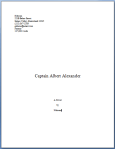
The top left-hand corner of your title page will have all your personal information. They want to see your name, address, phone number, e-mail address, the novel’s genre, and word count.
Your novel’s title is allowed to be between 20-24 point font if you want. Bold is also an option, but not necessary.
The title will appear halfway down the title page.
“A novel by [your name]” will be about three quarters of the way down the page.
The Next Pages
If you have a dedication, it will be on its own page.
If you have some sort of verse or quote, those will also need their own pages.
Do not include a page for acknowledgements.
The Chapters
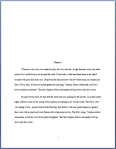
Chapter titles will be 12 point font. No bolding or italics.
Chapters will start from one quarter to halfway down the page.
An easy way to format chapter headings is to press enter five or six times
Make sure you always start your chapters the same way every time.
When you start a new chapter, make sure you use a page break to bump the new chapter onto a new page. This will keep it in place so that it will never budge, no matter how much you cut out or add to the previous chapter.
Page Numbers
Page numbers will start with 1 on Chapter 1 of your manuscript. Page numbers will not appear on the title page or dedication page.
Page 1 will be labeled in the footer of Chapter 1. It should be centered.
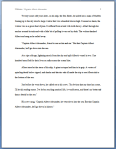
Page 2 will be in the header of the next page.
From page 2 onward, your headers will be labeled like this:
If you insert a section break after the title and dedication pages, it will make it easier to insert the page numbers.
For the most part, this is the most important of what you’ll need to know for formatting your manuscript. I used this video as reference, so I’m trusting everything it says is true because it was made by an author who has several novels published, and because it was uploaded this year, it should be up to date.
But just remember, whenever you go to turn in a manuscript, make sure you check the website of the agent or publisher you’re trying to contact. They might have specifications that differ with the ones stated in this video, and you should always do whatever you can to abide by what they want.
Reblogging aggressively. Some publishers will throw your manuscript into the slush pile or, worse, the trash if you don’t follow their desired format. Spec fic publishers are especially strict about manuscript formatting.
They are not some anonymous “a tribe in India”, they are the War-Khasi. Speaking as a former anthro student and as a reference librarian, I am beyond sick of posts (and articles, and emails, and museum displays) like this that present the work of a people without actually naming the people. It’s erasure, it’s reducing the great works of a culture to an Ozymandias-esque curiosity for foreigners to consume rather than an accomplishment that should help bring awareness of that culture’s existence.
They are the War-Khasi, a division of the Khasi, a people who call themselves Hynñiew Trep. They live in Meghalaya, and they have been building these bridges in the town of Cherrapunji for longer than anyone knows. They are not anonymous.
This is Natalya Kopylova, the head of the Samara club of Slavic cultures “Vesta”. What she is doing is usually called “фланкировка” in Russian, which, I think, would be translated as flourish or twirling here. It’s a traditional Cossack entertainment, demonstration of dexterity and ability to handle weapon. In the comments to the video on YouTube it was pointed that Natalya wears traditional Orenburg Cossack dress and twirls traditional Cossack weapons shashkas (шашки).




































 skysonglark reference