I just did a quick perusal of the Coptic resources on this site, and it has all the resources I’ve personally found worthwhile and then some. These are resources that took me months, if not years, to discover and compile. I am thoroughly impressed. The other languages featured on the site are:
Akkadian
Arabic
Aramaic
Church Slavonic
Egyptian (hieroglyphics and Demotic)
Elamite
Ethiopic (Ge’ez)
Etruscan
Gaulish
Georgian
Gothic
Greek
Hebrew
Hittite
Latin
Mayan (various related languages/dialects)
Old Chinese
Old English
Old French
Old Frisian
Old High German
Old Irish
Old Norse
Old Persian
Old Turkic
Sanskrit
Sumerian
Syriac
Ugaritic
For the love of all the gods, if you ever wanted to learn any of these languages, use this site.
Likely helpful for various recon-oriented polytheists.
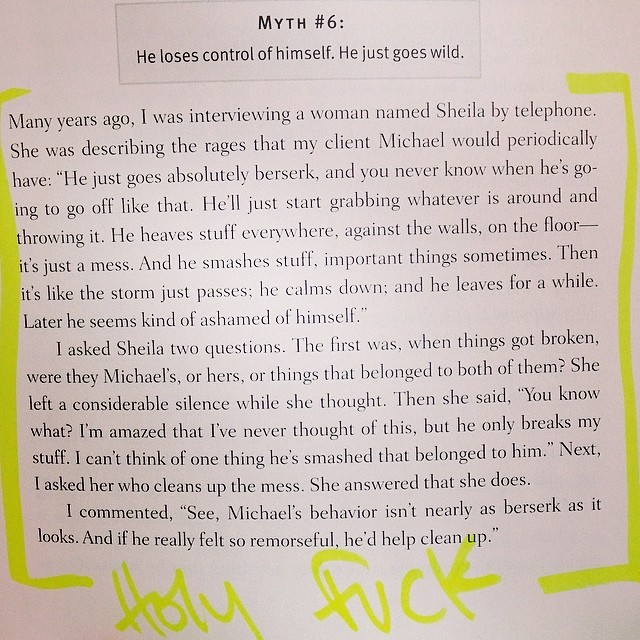
Reading about abusive men and the way they think. Very unsettling and an incredible book so far. Here are my very professional notes.
what book is this?
This is from “Why Does He DO That” by Lundy Bancroft.
I’m so glad I’m seeing more and more Lundy Bancroft quotes on my dash because this book CHANGES THE LIVES OF ABUSE VICTIMS.
The programs run for rehabilitating abusive men through the courts? Bancroft DESIGNED THEM. His programs are replicated ALL OVER THE WORLD. He literally wrote THE book on abuser rehabilitation.
Can we talk about how it seems like the entirety of the book is online on PDF, this making it accessible to anyone with an internet connection?
That is how we stop abuse.
We enable everyone to know what it looks like, so that when it happens, they can shut it down.
Arm yrself with knowledge!
Changed my life, would reccomend.
Reblogging for the PDF link.
—BB
Always reblogging because this isn’t just a partner abuse thing, this is a common abuse tactic PERIOD: Parents, siblings, bosses, general assholes, etc…
Pretty sure I’ve reblogged this like eight times, don’t care.
“Always reblogging because this isn’t just a partner abuse thing, this is a common abuse tactic PERIOD: Parents, siblings, bosses, general assholes, etc…”
Sometimes people like to write things about florist’s shops. Here are two things you need to know, the most egregiously wrong things.
1. It makes no fucking sense to sketch out a bouquet before you make it. Every individual flower is different in a way that cannot really be adjusted the way other building materials can be adjusted, and each individual bouquet is unique. Just put the fucking flowers together.
2. No one — in months and months of working at the flower shop — has ever cared what the flower/color of the flower means. No one’s ever asked. It’s just not something people tend to care about outside of fiction and it’s certainly not something most florists know. You know what florists know? What looks good and is thematically appropriate.
Here’s an actual list of the symbology of flowers, as professionals use it:
Yellow – for friends, hospitals Pink – girls, girlfriends, babies, bridesmaids Red – love Purple – queens White – marriage and death (DO NOT SEND TO HOSPITALS) Pink and purple – ur mum Red, orange, and yellow – ur mum if she’s stylish Red, yellow, blue – dudes and small children Blue and white – rare, probably a wedding Red and white – love for fancy bitches
Here are what the flowers actually mean to a florist:
The Fill It Out flowers:
Carnations – fuck u these are meaningless filler-flowers, not even your administrative assistant likes them, show some creativity Alstroemeria – by and large very similar to carnations but I like them better Tea roses – cute and lil and come several to a stalk, a classy filler flower Moluccella laevis – filler flower but CHOICE Delphinium – not as interesting as moluccella but purple so okay I guess Blue thistle – FUCK YEAH, some fucking textural variety at last! you’re getting this for a dude, aren’t you? Chrysanthemums – barely better than carnations but better is still better Gladiolus – ooh, risky business, someone understands the use of the Y-axis, very good
Focal points:
Long-stem roses – yeah whatever Lilies – LBD, looks good with everything, get used as often as possible Hydrangeas – thirsty fuckers, divas of the flower world and rightly so, treat them right and they make you look good Gerbera daisies – the rose’s hippie cousin, hotter but no one admits it Peonies – CHA-CHING, everybody’s absolute favorite but you need guap Orchids – if this isn’t for a wedding you’re probably trying too hard but they’re expensive so keep ordering them
You know what matters? THE CUSTOMER’S BUDGET. THAT’S TELLING.
-$20 – if you’re not under 12, fuck off, get your sugar something else $30 – good for bouquets but an arrangement will be lame $40 – getting there, there’s something that can be done with that. you can get some gerbs or roses with that and not have them look stupidly solo. $50 to $70 – tolerable $80 – FINALLY. It sounds elitist but this really is the basic amount of money you should expect to spend on an arrangement that matters. That’s your Mother’s Day arrangement. You’re probably not going to spend $80 on a bouquet. $90 to $130 – THE GOOD SHIT, you’re likely to get some orchids $130+ – Weddings and death. This amount of money gets you a memorial arrangement or a handmade bridal bouquet. Don’t spend this on a Mother’s Day or a Babe I Love You arrangement, buy whosits a massage or something.
Miscellaneous:
Everything needs greening and if you don’t think that you’re an idiot.
As a new employee, when you start making arrangements, you can’t see the mistakes you’re making because you’re brand new and you’re learning an art form from the ground up.
With a few exceptions customers don’t have a clear plan in mind. They want you to develop the bouquet for them. They want something that will delight their little sweetbread but you’re lucky if they know that person’s favorite color, let alone flower.
Flower shops don’t typically have every kind of flower in every kind of color. Customers generally aren’t assed about that. Most people don’t care about the precise shade of the rose or having daffodils in July, because they’re not boning up on flower language before they buy. That would imply that they’ve got a clear bouquet in mind and, again, they don’t.
Being a florist is essentially a lot like what I imagine being a mortician is about. You’re basically keeping dead things looking good for as long as possible. You keep the product in the fridge so it doesn’t rot and look horrible by the time the family gets a whack at it, and in the meanwhile you put it in a nice container.
Anyway that’s flowers.
this is magnificent and I love hearing about ppl job feilds
Writing with Color: Description Guide – Words for Skin Tone
We discussed the issues describing People of Color by means of food in Part Iof this guide, which brought rise to even more questions, mostly along the lines of “So, if food’s not an option, what can I use?” Well, I was just getting to that!
This final portion focuses on describing skin tone, with photo and passage examples provided throughout. I hope to cover everything from the use of straight-forward description to the more creatively-inclined, keeping in mind the questions we’ve received on this topic.
So let’s get to it.
S T A N D A R D D E S C R I P T I O N
B a s i c C o l o r s
Pictured above: Black, Brown, Beige, White, Pink.
“She had brown skin.”
This is a perfectly fine description that, while not providing the most detail, works well and will never become cliché.
Describing characters’ skin as simply brown or beige works on its own, though it’s not particularly telling just from the range in brown alone.
C o m p l e x C o l o r s
These are more rarely used words that actually “mean” their color. Some of these have multiple meanings, so you’ll want to look into those to determine what other associations a word might have.
Complex colors work well alone, though often pair well with a basic color in regards to narrowing down shade/tone.
For example: Golden brown,russet brown, tawny beige…
As some of these are on the “rare” side, sliding in a definition of the word within the sentence itself may help readers who are unfamiliar with the term visualize the color without seeking a dictionary.
“He was tall and slim, his skin a russet, reddish-brown.”
Comparisons to familiar colors or visuals are also helpful:
“His skin was an ochre color, much like the mellow-brown light that bathed the forest.”
M o d i f i e r s
Modifiers, often adjectives, make partial changes to a word.The following words are descriptors in reference to skin tone.
D a r k – D e e p – R i c h – C o o l
W a r m – M e d i u m – T a n
F a i r – L i g h t – P a l e
Rich Black, Dark brown, Warm beige, Pale pink…
If you’re looking to get more specific than “brown,” modifiers narrow down shade further.
Keep in mind that these modifiers are not exactly colors.
As an already brown-skinned person, I get tan from a lot of sun and resultingly become a darker,deeper brown. I turn a pale, more yellow-brown in the winter.
While best used in combination with a color, I suppose words like “tan”“fair” and “light” do work alone; just note that tan is less likely to be taken for “naturally tan” and much more likely a tanned White person.
Calling someone “dark” as description on its own is offensive to some and also ambiguous. (See: Describing Skin as Dark)
U n d e r t o n e s
Undertones are the colors beneath the skin, seeing as skin isn’t just one even color but has more subdued tones within the dominating palette.
Mentioning the undertones within a character’s skin is an even more precise way to denote skin tone.
As shown, there’s a difference between say, brown skin withwarm orange-red undertones (Kelly Rowland) and brown skin with cool, jewel undertones (Rutina Wesley).
“A dazzling smile revealed the bronze glow at her cheeks.”
“He always looked as if he’d ran a mile, a constant tinge of pink under his tawny skin.”
Standard Description Passage
“Farah’s skin, always fawn, had burned and freckled under the summer’s sun. Even at the cusp of autumn, an uneven tan clung to her skin like burrs. So unlike the smooth, red-brown ochre of her mother, which the sun had richened to a blessing.”
Here the state of skin also gives insight on character.
Note my use of “fawn” in regards to multiple meaning and association. While fawn is a color, it’s also a small, timid deer, which describes this very traumatized character of mine perfectly.
Though I use standard descriptions of skin tone more in my writing, at the same time I’m no stranger to creative descriptions, and do enjoy the occasional artsy detail of a character.
C R E A T I V E D E S C R I P T I O N
Whether compared to night-cast rivers or day’s first light…I actually enjoy seeing Characters of Colors dressed in artful detail.
I’ve read loads of descriptions in my day of white characters and their “smooth rose-tinged ivory skin”, while the PoC, if there, are reduced to something from a candy bowl or a Starbucks drink, so to actually read of PoC described in lavish detail can be somewhat of a treat.
Still, be mindful when you get creative with your character descriptions. Too many frills can become purple-prose–like, so do what feels right for your writing when and where.
Not every character or scene warrants a creative description, either. Especially if they’re not even a secondary character.
Using a combination of color descriptions from standard to creative is probably a better method than straight creative. But again, do what’s good for your tale.
Now before you run off to compare your heroine’s skin to the harvest moon or a cliff side, think about the associations to your words.
When I think cliff, I think of jagged, perilous, rough. I hear sand and picture grainy, yet smooth. Calm. mellow.
So consider your character and what you see fit to compare them to.
Also consider whose perspective you’re describing them from. Someone describing a person they revere or admire may have a more pleasant, loftier description than someone who can’t stand the person.
“Her face was like the fire-gold glow of dawn, lifting my gaze, drawing me in.”
“She had a sandy complexion, smooth and tawny.”
Even creative descriptions tend to draw help from your standard words.
F L O W E R S
Pictured above: Calla lilies, Western Coneflower, Hazel Fay, Hibiscus, Freesia, Rose
It was a bit difficult to find flowers to my liking that didn’t have a 20 character name or wasn’t called something like “chocolate silk” so these are the finalists.
You’ll definitely want to avoid purple-prose here.
Also be aware of flowers that most might’ve never heard of. Roses are easy, as most know the look and coloring(s) of this plant. But Western coneflowers? Calla lilies? Maybe not so much.
“He entered the cottage in a huff, cheeks a blushing brown like the flowers Nana planted right under my window. Hazel Fay she called them, was it?”
These ones are kinda odd. Perhaps because I’ve never seen these in comparison to skin tone, With the exception of amber.
At least they’re common enough that most may have an idea what you’re talking about at the mention of “pinecone.“
I suggest reading out your sentences aloud to get a better feel of how it’ll sounds.
"Auburn hair swept past pointed ears, set around a face like an acorn both in shape and shade.”
I pictured some tree-dwelling being or person from a fantasy world in this example, which makes the comparison more appropriate.
I don’t suggest using a comparison just “cuz you can” but actually being thoughtful about what you’re comparing your character to and how it applies to your character and/or setting.
W O O D
Pictured above: Mahogany, Walnut, Chestnut, Golden Oak, Ash
Wood can be an iffy description for skin tone. Not only due to several of them having “foody” terminology within their names, but again, associations.
Some people would prefer not to compare/be compared to wood at all, so get opinions, try it aloud, and make sure it’s appropriate to the character if you do use it.
“The old warlock’s skin was a deep shade of mahogany, his stare serious and firm as it held mine.”
These are trickier to use. As with some complex colors, the writer will have to get us to understand what most of these look like.
If you use these, or any more rare description, consider if it actually “fits” the book or scene.
Even if you’re able to get us to picture what “rutile” looks like, why are you using this description as opposed to something else? Have that answer for yourself.
“His skin reminded her of the topaz ring her father wore at his finger, a gleaming stone of brown, mellow facades.”
P H Y S I C A L D E S C R I P T I ON
Physical character description can be more than skin tone.
Show us hair, eyes, noses, mouth, hands…body posture, body shape, skin texture… though not necessarily all of those nor at once.
Describing features also helps indicate race, especially if your character has some traits common within the race they are, such as afro hair to a Black character.
How comprehensive you decide to get is up to you. I wouldn’t overdo it and get specific to every mole and birthmark. Noting defining characteristics is good, though, like slightly spaced front teeth, curls that stay flopping in their face, hands freckled with sunspots…
G E N E R A L T I P S
Indicate Race Early: I suggest indicators of race be made at the earliest convenience within the writing, with more hints threaded throughout here and there.
Get Creative On Your Own: Obviously, I couldn’t cover every proper color or comparison in which has been “approved” to use for your characters’ skin color, so it’s up to you to use discretion when seeking other ways and shades to describe skin tone.
Skin Color May Not Be Enough: Describing skin tone isn’t always enough to indicate someone’s ethnicity. As timeless cases with readers equating brown to “dark white” or something, more indicators of race may be needed.
Describe White characters and PoC Alike: You should describe the race and/or skin tone of your white characters just as you do your Characters of Color. If you don’t, you risk implying that White is the default human being and PoC are the “Other”).
PSA: Don’t use “Colored.” Based on some asks we’ve received using this word, I’d like to say that unless you or your character is a racist grandmama from the 1960s, do not call People of Color “colored” please.
Not Sure Where to Start? You really can’t go wrong using basic colors for your skin descriptions. It’s actually what many people prefer and works best for most writing. Personally, I tend to describe my characters using a combo of basic colors + modifiers, with mentions of undertones at times. I do like to veer into more creative descriptions on occasion.
Want some alternatives to “skin” or “skin color”?Try:Appearance, blend, blush, cast, coloring, complexion, flush, glow, hue, overtone, palette, pigmentation, rinse, shade, sheen, spectrum, tinge, tint, tone, undertone, value, wash.
I tried to be as comprehensive as possible with this guide, but if you have a question regarding describing skin color that hasn’t been answered within part I or II of this guide, or have more questions after reading this post, feel free to ask!
You know what’s awesome? Research. You know what’s not awesome? Not being able to get access to research because it’s stuck behind a paywall and you don’t belong to an institution/your institution doesn’t subscribe to that particular journal.
FEAR NOT.
Here is a list of free, open access materials on a variety of subjects. Feel free to add if you like!
Ubiquity Press– Journals covering archaeology, comics scholarship, museum studies, psychology, history, international development, and more. Also publishes open access ebooks on a wide variety of subjects.
Europeana– Digital library about the history and culture of Europe.
Internet Archive– In addition to books, they have music and videos, too. Free! And legal! They also have the Wayback Machine, which lets you see webpages as they looked at a particular time.
Elsevier Open Access– Elsevier’s kind of the devil but you might as well take advantage of this. Mainly STEM, also a linguistics journal and a medical journal in Spanish.





 skysonglark reference