writing-prompt-s:

“Cursed with the greatest Evil to ever walk the realms of the Living,” the protagonist isn’t really interested in destroying the world at all, and runs an animal shelter. 

So you know how, when you start trying to decide what you want to do when you’re finished high school, your mom will inevitably be like, “You could be a lawyer”? And you’re like, sure, yeah, I could be, but I don’t really want to be?

That’s how I feel about curses.

Yeah, sure, I have the potential to literally end life as we know it, but I don’t really want to, you know? I’ve got a good thing going here. I’ve got a dog and a cat and three fish and a parakeet and some mice and all the critters in the shelter, plus my girlfriend and my work friends and my step-mom. I don’t really want to wreck that, you know?

But, hey, you asked how I could say no. Which is the question everybody asks me. “But it’s your destiny!” No, technically it’s a curse. And technically I’m cursed with the potential for evil. My uncle Herbert had the potential to be a nuclear physicist, but instead he works at Home Depot. Just because you could do a thing doesn’t mean you’re going to. It just means you could.

Should we talk about what I did do, instead? I know, I know, this is your interview, but could you humour me for just a second? I’ve already answered all your questions in other interviews; your viewers can just find them online. 

So what actually happened, is my birth parents were like “Holy crap, she’s a monster” and promptly gave me up for adoption. But, I mean, it was all over the news, everyone was concerned about this terrible baby. So who the hell’s going to adopt said baby but people who are actually terrible? 

I mean, my childhood didn’t totally suck. They kind of worshipped me, in a weird and creepy way. I guess I was just the kind of kid who didn’t want to go that far. Like, maybe you’re smart enough to be a lawyer, but that’s a lot of work, you know? So rather than study great tyrants and battle plans and general awfulness, I kind of just coasted. Then my parents – and I use that term loosely – got divorced, which was kind of inevitably given the kind of people they were, but that’s not really important to the story. What is important is that my dad – again, loosely – remarried this actually nice person. Like, I don’t know how it happened. He conned her or something. Seriously, the marriage lasted about a year, but Harriet sued for custody (I’m twelve at this point) and won, obviously, because she was not a horrible person. So basically Harriet raised me, which turned out really well for me. 

And she said to me, she said “Kendra, you have a choice. You have a lot of paths open to you, but you’re the one who chooses which one to go down.” Which is good life advice in a general sense, really. But for me, it was kind of life-changing. I always assumed it would just happen, you know? Like I would wake up one day and I’d have taken over the world. I didn’t want to do it, I just assumed I would anyways. But Harriet made me realize I’d have to work for that. So I didn’t. I volunteered at an animal shelter through high school, and when the owners wanted to retire, they gave it to me. And I’m cool with that, you know? I mean, every so often I wonder if doing this is leading me down the world-domination-path, but, hey, whatever, right? I’m just going to keep doing what I want. Nothing wrong with that, right?

Freelance editing

skysonglark:

I’m available to do editing work for people over the summer. I’m a published author (anthology coming out in the fall, I think) and have been doing a fair amount of editing work for my friends. Currently in my second year of creative writing at university. Will charge 5$ per page, non manuscript or essay prices negotiable. Message me for details.

amandaonwriting:

At the end of every year, the team at Writers Write looks at which posts were viewed most over the previous 12 months. This year, however, we were curious to find out which of our writing posts were the most popular of all time.

So we decided to start 2017 with the 25 posts you’ve viewed most on our blog over the past five years. (The number of views indicated here are from 31 December 2016.)

Our top post has almost 2 million views, and we’ve seen it used in varying formats across the internet. The second and third posts have more than 1 million views combined.

The posts vary. They include reference sheets for writers, longer posts on grammar and creative writing, a selection of excerpts from poetry, business writing tips, writing prompts, and quotations. We hope you enjoy them.

Our Top 25 Writing Posts Of All Time

1.  
 45 Ways To Avoid Using The Word ‘Very’

2.  
 Cheat Sheets For Writing Body Language

3.  
 155 Words To Describe An Author’s Tone

4.  
 Synonyms for 95
Commonly Used Words – A Mini-Thesaurus for Writers

5.  
 123 Ideas For
Character Flaws

6.  
 Persuasive Writing – Emotional vs Intellectual Words

7.  
 The Daily Word Counts of 39 Famous Authors

8.  
 17 Of The Most Powerful Excerpts From Poetry

9.  
 15 Questions Authors Should Ask Characters

10.
 The 12 Common Character Archetypes

11.
 350 Character Traits – A Fabulous Resource for Writers

12.
 209 Words To Describe Touch

13.
 Body Language Reference Sheet

14.
 20 Myths To Use As Writing Prompts

15.
 Eight Commonly Misused Words

16.
 37 Ways To Write About
Anger

17.
 30 Examples To Help You Master Concord

18.
 Psychopath Or Sociopath – What’s The Difference?

19.
 The 5 Elements
Of A Story

20.
 16 Types of
Government – A Writer’s Resource

21.
 5 Incredibly
Simple Ways To Help Writers Show And Not Tell

22.
 6 Sub-Plots That Add Style To Your Story

23.
 Write Your Novel In A Year – Week 35: 3 Must-Have Scenes
That Reveal Character

24.
 The Top 12 Literary Love Quotes

25.  Show! Don’t
tell. – 10 Verbs That Make You Tell

~~~

The posts were mostly written by Amanda Patterson, Mia Botha, Anthony Ehlers, and Donna Radley. Thank you for your brilliant contributions.

laundry-gymnist:

ohmyblakesobsession:

imgenuinlysarcastic:

argonianbot:

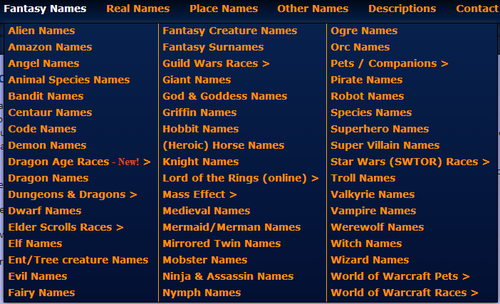
i dont think you guys appreciate how rad this site is 

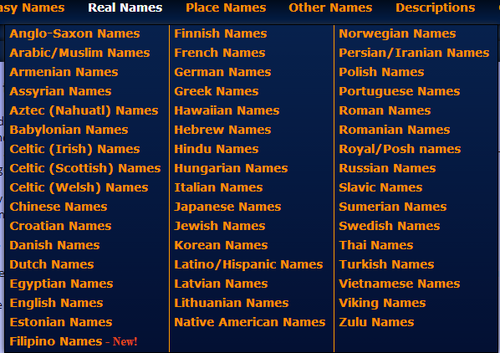
because first of all you got your basic fantasy and game race names for like

everything

BUT AS IF THAT ISN’T ENOUGH

REAL NAMES WHICH ARE GOOD FOR BOOKS

AND THIS THERE’S MORE????

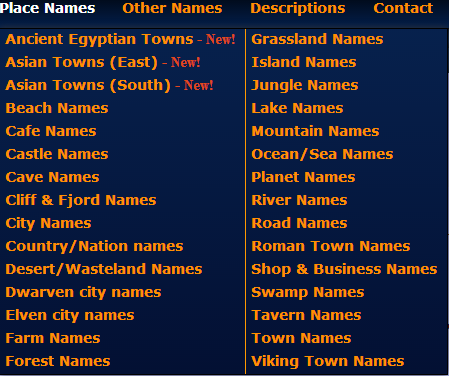
BAM, PLACE NAMES

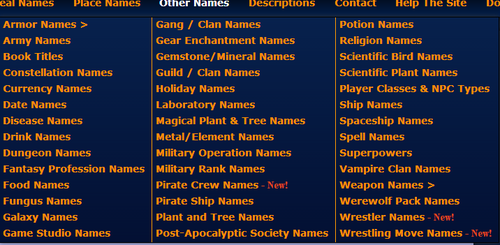
AND STILL MORE

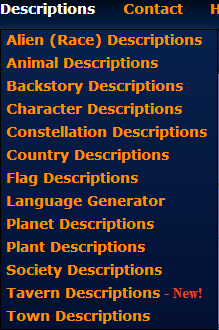
SO YOU SEE THESE LITTLE OPTIONS HERE

PLEASE, PLEASE

GO AND TRY TO HELP A GOOD PERSON OUT

Writing a story and need this for later

@skysonglark

disneysmermaids:

cherribalm:

site that you can type in the definition of a word and get the word

site for when you can only remember part of a word/its definition 

site that gives you words that rhyme with a word

site that gives you synonyms and antonyms

THAT FIRST SITE IS EVERY WRITER’S DREAM DO YOU KNOW HOW MANY TIMES I’VE TRIED WRITING SOMETHING AND THOUGHT GOD DAMN IS THERE A SPECIFIC WORD FOR WHAT I’M USING TWO SENTENCES TO DESCRIBE AND JUST GETTING A BUNCH OF SHIT GOOGLE RESULTS

DEAR RESEARCHERS OF TUMBLR

bymyprettyfloralbonnet:

You know what’s awesome?  Research.  You know what’s not awesome?  Not being able to get access to research because it’s stuck behind a paywall and you don’t belong to an institution/your institution doesn’t subscribe to that particular journal.

FEAR NOT.

Here is a list of free, open access materials on a variety of subjects.  Feel free to add if you like!

GO FORTH AND LEARN SHIT, MY FRIENDS.

Directory of Open Access Journals– A compendium of over 9000 journals from 133 countries, multilingual and multidisciplinary.

Directory of Open Access Books– Like the above, but for ebooks.  Also multidisciplinary.

Ubiquity Press– Journals covering archaeology, comics scholarship, museum studies, psychology, history, international development, and more.  Also publishes open access ebooks on a wide variety of subjects.

Europeana–  Digital library about the history and culture of Europe.

Digital Public Library of America– American history, culture, economics, SO MUCH AMERICA.

Internet Archive– In addition to books, they have music and videos, too.  Free!  And legal!  They also have the Wayback Machine, which lets you see webpages as they looked at a particular time.

College and Research Libraries– Library science and information studies.  Because that’s what I do.

Library of Congress Digital Collections– American history and culture, historic newspapers, sound recordings, photographs, and a ton of other neat stuff.

LSE Digital Library– London history, women’s history.

Wiley Open Access– Science things!  Neurology, medicine, chemistry, ecology, engineering, food science, biology, psychology, veterinary medicine.

SpringerOpen–  Mainly STEM journals, looooong list.

Elsevier Open Access–  Elsevier’s kind of the devil but you might as well take advantage of this.  Mainly STEM, also a linguistics journal and a medical journal in Spanish.

curiousgeorgiana:

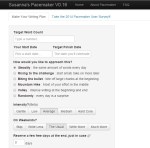
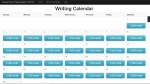
Stumbled across this really useful tool for anyone doing NaNoWriMo or planning any writing schedule—Pacemaker.

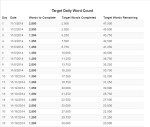
You can customize a variety of settings for your word count schedule—like writing significantly more on the weekends, or less, taking a few days off, or even generate a random daily word count target. Then you can display the schedule by calendar, graph, or table and share it with others.

Plus you can adjust the date range, so if you fall behind, it’s easy to update the word count plan and catch up.

Check it out here.

dealanexmachina:

avelera:

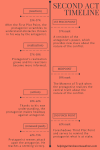
Useful if this is how you think, though often I don’t see the outline until after the draft is written, because after awhile one just internalize this kind of stuff from all the media one ingests. Point is, use if helpful, ignore if not.

This is EXACTLY how many shows on television plot their episodes, though it’s usually through a five act timeline:

1) Introduction to the characters and the mission/adventure.

2) Mission begins. Protagonist establishes cursory allies and foes. Some sort of complication to the plot at the end of Act II.

3) Protagonist and friends deal with complication of the plot. Gears up for another go at the goal, but falls short in some way, usually related to protagonist’s personal journey.

4) Critical information needed for climax is discovered. Protagonist angsts, then rallies.

5) The lead up to and the final resolution. 

Because studios sometimes require a 6 act break for extra advertising, the last coda is usually related to season arc/character development. But generally speaking, this is the structure a lot of screenwriters use.

the-brightest-witch-studies:

image

Word Counter – Not only does it count the number of words you’ve written, it tells you which words are used most often and how many times they appear.

Tip Of My Tongue – Have you ever had a word on the tip of your tongue, but you just can’t figure out what it is? This site searches words by letters, length, definition, and more to alleviate that.

Readability Score – This calculates a multitude of text statistics, including character, syllable, word, and sentence count, characters and syllables per word, words per sentence, and average grade level.

Writer’s Block (Desktop Application) – This free application for your computer will block out everything on your computer until you meet a certain word count or spend a certain amount of time writing.

Cliche Finder – It does what the name says.

Write Rhymes – It’ll find rhymes for words as you write.

Verbix – This site conjugates verbs, because English is a weird language.

Graviax – This grammar checker is much more comprehensive than Microsoft Word, again, because English is a weird language.


Sorry for how short this is! I wanted to only include things I genuinely find useful.